

What "Single-Ingredient" Really Means (and Why It Matters)
Walk down any pet aisle and you'll see the same words over and over: "natural," "limited ingredient," "real fish," "single protein." They sound reassuring. But they're not all regulated the same way, and some mean far less than they suggest. Here's how to tell the real thing from the marketing — and why a genuinely single-ingredient treat is worth seeking out.
The words, decoded
Single-ingredient should mean exactly what it says: the product contains one ingredient. One fish. One protein. Nothing added. This is the strictest and clearest claim — and the easiest to verify, because the ingredient list is one line long.
Limited-ingredient means few ingredients, not one. A limited-ingredient diet might contain a single protein plus a single carbohydrate and a handful of vitamins. That can be a great option for many dogs, but "limited" is a spectrum, and some products stretch the definition.
Single-protein means one animal protein source — but the product can still contain plenty of other ingredients (starches, oils, flavourings). It's about the protein, not the whole recipe.
The takeaway: the only way to know what's really in a product is to read the ingredient list, not the front of the bag. A short list you can pronounce is almost always a good sign.
How to actually read the label
A few quick habits tell you most of what you need to know:
Ingredients are listed by weight, heaviest first — so whatever's named first is what there's the most of. If a "salmon" treat lists salmon fourth, behind a couple of starches and a "flavour," it's not really a salmon treat.
Watch for vague catch-alls like "meat meal," "animal fat," "fish meal," or "natural flavour." These aren't necessarily bad, but they're not specific, and specificity is what you want when you're trying to control exactly what your dog eats.
Count the line items. A treat with one ingredient has nothing to hide. A treat with twenty has a lot of places for a filler, a preservative, or a mystery protein to sneak in.
Why single-ingredient is worth it
You know exactly what your dog is eating. No hidden proteins, no surprise additives. For a dog with sensitivities, that clarity is the whole point — you can feed with confidence and, if something ever does bother them, you can actually pinpoint it. We go deeper on this here: Best Fish Treats for Dogs with Allergies and Sensitive Stomachs.
The nutrition is real, not diluted. When a treat is one clean protein, your dog gets the actual benefits of that food — the protein, the omega-3s, the natural nutrients — instead of calories padded out with cheap fillers. (More on the fish side of that: Are Salmon and Fish Good for Dogs?)
Fewer ingredients, fewer problems. Every additive is one more thing that can irritate a sensitive dog or pad a label. Simple is genuinely better here — not as a slogan, but as a practical way to reduce what can go wrong.
What single-ingredient looks like at Shay's Way
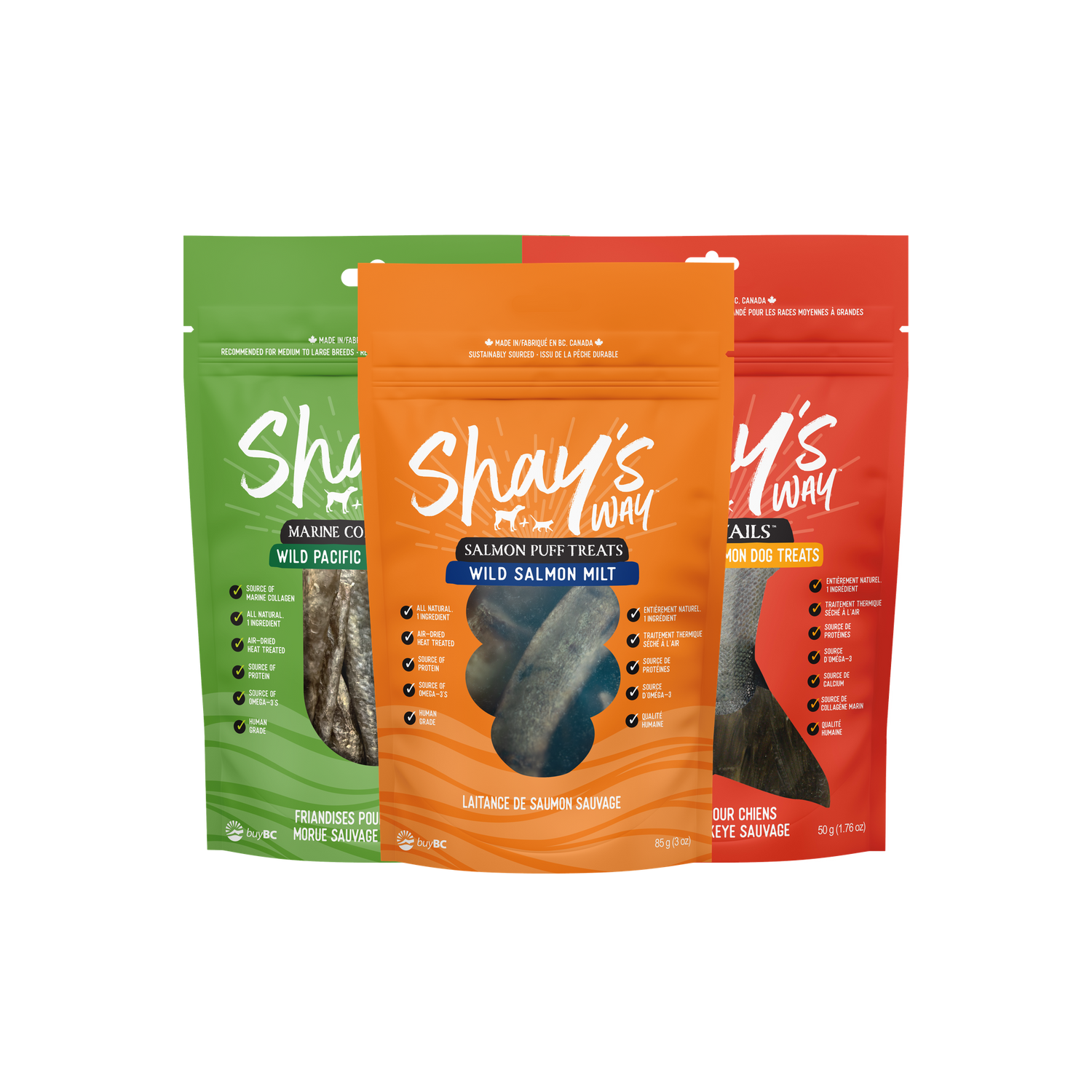
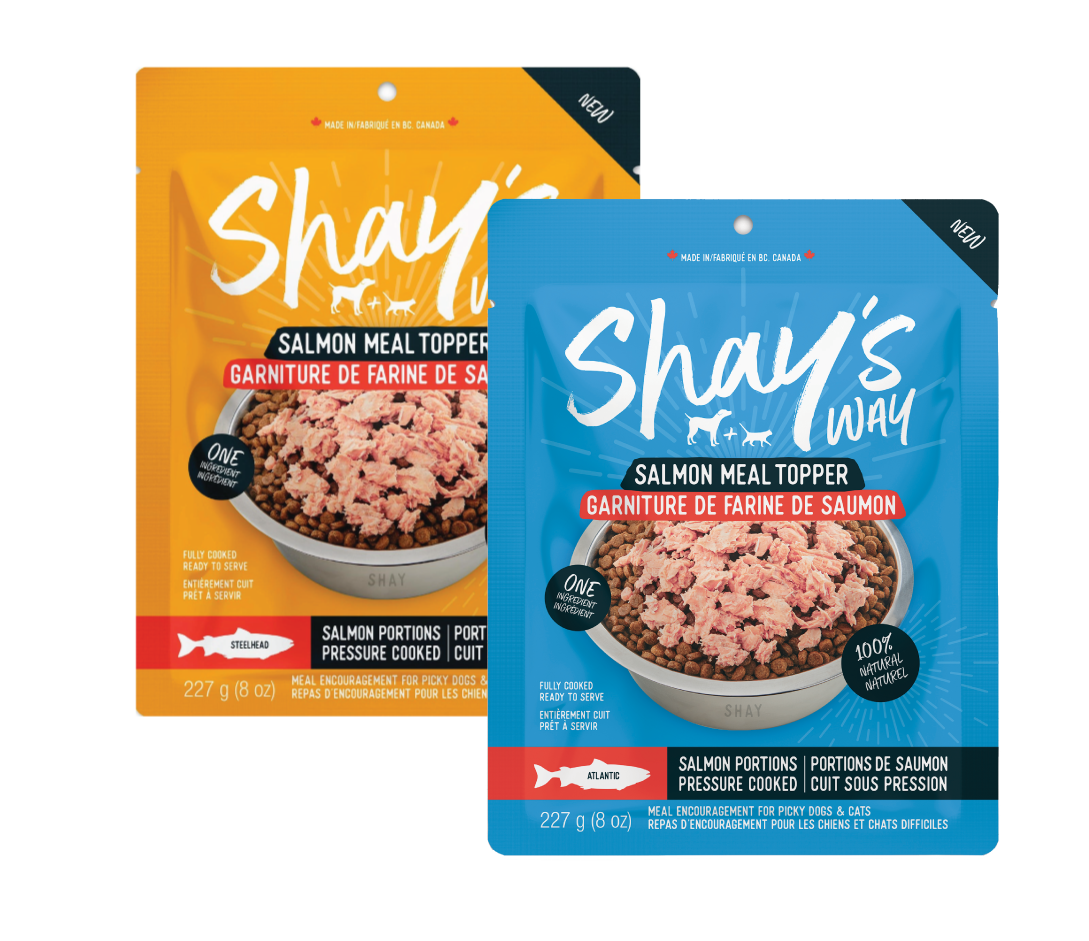
We built the whole brand around this idea, so it's not a sub-line — it's the entire product. Every meal topper is one species of fish, gently cooked, and nothing else. Every split tail is one air-dried salmon tail. Our collagen treats are one thing: cod skin. Our milt puffs are one thing: salmon milt.
We also keep each species completely separate through processing, so an "Atlantic salmon" topper is Atlantic salmon — not a blend that happens to include some. If your dog does best on a specific fish, you can feed that fish and only that fish.
The bottom line
"Single-ingredient" is one of the few label claims that's easy to verify and hard to fake — the proof is right there in a one-line ingredient list. When you're feeding a picky dog, a sensitive dog, or just a dog you want to feed well, fewer ingredients you can actually name is a reliable place to start.
Browse the meal topper and split tails collections to see what a one-ingredient label looks like — from ocean to bowl, nothing added.
This article is general information, not veterinary advice. For guidance on your dog's specific dietary needs or sensitivities, talk to your veterinarian.